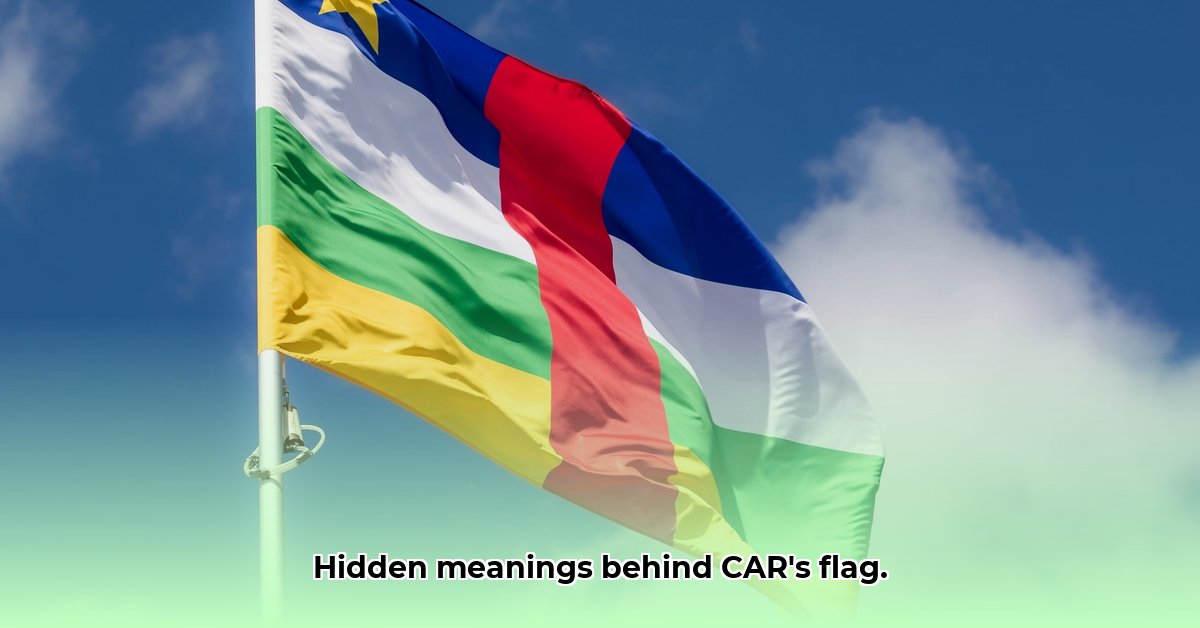
The Central African Republic's flag—a vibrant display of green, yellow, blue, and a central yellow star—is more than just a pretty picture. It's a visual tapestry woven with threads of history, aspiration, and resilience, mirroring the nation's complex journey. This deep dive explores the flag's symbolism, tracing its origins and evolution through periods of both hope and turmoil. Understanding its meaning requires examining its historical context, political influences, and the enduring significance it holds for the Central African people. For a deeper visual exploration, check out this detailed guide on the Central African flag.
Central African Republic Flag Meaning: A Historical Perspective
The flag's design wasn't arbitrary; it was the vision of Barthélemy Boganda, a pivotal figure in Central African history. Boganda, a visionary leader, envisioned a unified Africa, an aspiration woven into the very fabric of the flag. Adopted in 1958, the year the Central African Republic gained independence from France, the flag instantly became a powerful symbol of newfound freedom and national identity. But how did this ambition translate into the flag's design?
Deconstructing the Colors and Star
The flag's colors tell a multifaceted story. The blue and white stripes subtly acknowledge France, the former colonial power—a historical reality woven into the nation's narrative. However, the green and yellow stripes boldly assert African identity, representing the continent's landscape and the country's determination to forge its own path. The red horizontal stripe connecting these elements is interpreted as a symbol of national unity, or, by some, as representing the sacrifices made during the struggle for independence. The single, central yellow star shines brightly, representing both independence and the nation's place within the wider African community. Isn't it remarkable how such simple elements can carry such profound weight?
The Flag's Resilience Amidst Political Upheaval
The flag's journey hasn't been without its challenges. The authoritarian rule of Jean-Bédel Bokassa saw attempts to replace the flag, reflecting his personal ambitions and foreign alliances. Yet, even after his downfall, the flag persevered, highlighting its deep connection to the Central African people. Its continued use demonstrates its enduring power as a symbol of national identity, transcending individual rulers and political upheavals. How did this flag, despite attempts to replace it, manage to remain a potent symbol of national identity?
How Political Instability Shaped the Flag's Interpretation
The Central African Republic's history is one of remarkable instability. How has this impacted the meaning of the flag? The flag's symbolism has been profoundly shaped by the nation's turbulent journey. While the design itself remains unchanged, its interpretation has shifted dramatically in response to the country's political realities.
A Symbol Reinterpreted
The initially hopeful symbolism—green representing lush forests, white symbolizing peace, blue representing rivers, and the yellow star representing national aspirations—has been deeply affected by decades of conflict. The green might now evoke the exploitation of natural resources amidst conflict, the white a stark contrast to the violence, and the blue a reflection of the ongoing struggle for survival. The yellow star, however, continues to represent the unwavering hope for a better future, a symbol of resilience in the face of adversity. This enduring hope speaks volumes about the determination of the Central African people. What does this evolution in interpretation tell us about the enduring power of symbols?
The Flag as a Silent Witness
The flag, in its unchanged design, acts as a silent witness to the nation's struggles. Its enduring presence stands in stark contrast to the instability it reflects, becoming a powerful testament to the resilience of the Central African people. This paradox—a static symbol within a dynamic and challenging context—adds another layer to the flag's profound significance.
The Flag Today: A Symbol of Hope and Enduring Identity
The Central African Republic flag is far more than a historical artifact; it's a living symbol reflecting the nation's ongoing quest for peace and unity. It embodies the struggles and aspirations of its people, serving as a powerful reminder of their journey and their shared desire for a brighter future. Its enduring presence speaks to the resilience of the nation and its enduring hope. The flag continues to evolve, representing both the challenges and triumphs of the Central African Republic. What role does this symbol play in shaping national identity in the present day?
Key Takeaways:
- The flag's design reflects both colonial history and Pan-African aspirations.
- The flag's symbolism has evolved significantly in response to political instability.
- Despite attempts to replace it, the flag remains a potent symbol of national identity.
- The flag's enduring presence showcases the resilience of the Central African people.
- The flag continues to play a crucial role in fostering national unity and hope.